
Criminal Court Records in Clarke County
A criminal court record is the case file the clerk opens once charges are filed against a person. In Clarke County, that file lives with the Circuit Clerk for felony cases and serious matters heard in Circuit Court. The Circuit Clerk receives and files indictments, motions, and related papers in criminal cases. The clerk issues process, keeps the record of judgments, and stores the docket that lists every step. Each entry is added as the case moves, so the file grows from the first charge to the final order.
Several courts produce criminal court records in Clarke County. Circuit Court is the felony and jury trial court, and the county sits in the 10th Circuit Court District. Justice Court handles initial felony appearances, affidavits, DUIs, and county ordinance cases. Quitman Municipal Court hears city misdemeanor and ordinance matters. Youth Court handles juvenile cases, and those files stay confidential. A felony usually starts in Justice Court and ends up as a Circuit Court case file. Records from all of these venues are summarized in the county's court records overview.
Search Clarke County Criminal Court Records
Most Clarke County criminal court records are searched through Mississippi Electronic Courts, the statewide case system the public reaches as PAMEC. Clarke County Circuit Court went live on the system in 2020, so recent felony cases carry an electronic trail. The system works much like the federal PACER tool. Users register, log in, pick the court district, and search by name or case number. Older cases, sealed files, and records outside the system still require the clerk.
- Open the PAMEC registration page and set up public access to Mississippi Electronic Courts.
- Select the 10th Circuit Court District for a Clarke County felony case, or the proper lower court for a misdemeanor.
- Search by the defendant's name, or by the case number if you have it.
- Narrow the results by case type and filing date, then open the docket to read each entry and the disposition.
- Ask the Circuit Clerk for a certified copy when the case predates the system or a document is not online.
Mississippi does not offer a single public lookup of every criminal history. The 10th Circuit court information page lists Clarke County Circuit Court, its office hours, and the case status flags used in the system. The broader state system sits on the Mississippi Electronic Courts landing page.
Clarke County Criminal Case Path
Most felony cases follow the same path in Clarke County. It begins with an arrest by the Sheriff's Office or another agency. The sheriff serves as jailor and keeps the jail docket that logs the booking. From there the case moves to Justice Court for the first court step.
Justice Court handles the initial appearance and the affidavit for every felony. Judges hold sessions at the jail three times each week, which protects the right to an initial appearance within three days of arrest. At that hearing the court reviews the charge, advises the person of their rights, and may set bond. The case is not yet a Circuit Court file at this stage.
A felony charge becomes a Circuit Court case once it is bound over or indicted. A grand jury returns an indictment, and the Circuit Clerk opens the case file. From that point, the charge, arraignment, pleas, and sentence are tracked in the Circuit Court record. The arrest and booking side is covered in detail on the county's arrest records and court charges page.
Stages of a Clarke County Criminal Case
A criminal case moves through set stages, and each one adds entries to the record. Reading those stages in order helps make sense of a Clarke County criminal case file. The docket lists the date and a short label for every step.
Case flow: Charges Filed › Arraignment › Pretrial / Motions › Plea or Trial › Disposition › Sentencing
| Stage | What Happens |
|---|---|
| Arraignment | The defendant hears the formal charges and enters a plea of guilty, not guilty, or no contest. |
| Pretrial / Motions | Lawyers file motions, exchange evidence, and argue issues; the docket may show a Pre Trial status. |
| Plea or Trial | The case ends in a plea agreement or goes to a jury or bench trial for a verdict. |
| Sentencing | The judge sets the penalty, which may include jail or prison, probation, fines, or post-release supervision. |
What a Clarke County Criminal Record Shows
A Clarke County criminal court record is built from many fields. The MEC court information pages reveal the real status language the system uses. The table below lists the core fields found in a felony case file.
| Field | What It Shows |
|---|---|
| Case Number | The unique number the Circuit Clerk assigns when the file opens. |
| Defendant | The name of the person charged, with identifying details kept on file. |
| Charges | The offenses listed in the indictment or charging document, by name and degree. |
| Plea | The defendant's formal answer, such as guilty, not guilty, or no contest. |
| Disposition | The outcome of each charge, from dismissal to conviction. |
| Sentence | The penalty ordered, including custody time, probation, fines, or supervision. |
Note: Flags such as Bound Over, Plea Pending, Probation, and Nolle Pros Pending appear on the docket to mark where a Clarke County case stands.
Who Prosecutes Clarke County Criminal Cases
Two offices prosecute criminal cases in Clarke County. Felony cases in Circuit Court are handled by the District Attorney for the 10th Circuit Court District. District Attorney Kassie Coleman serves Clarke, Kemper, Lauderdale, and Wayne counties from an office in Meridian. The DA presents felony matters, takes cases to the grand jury, and tries them in Circuit Court.
The District Attorney's official website describes the office and the counties it serves.
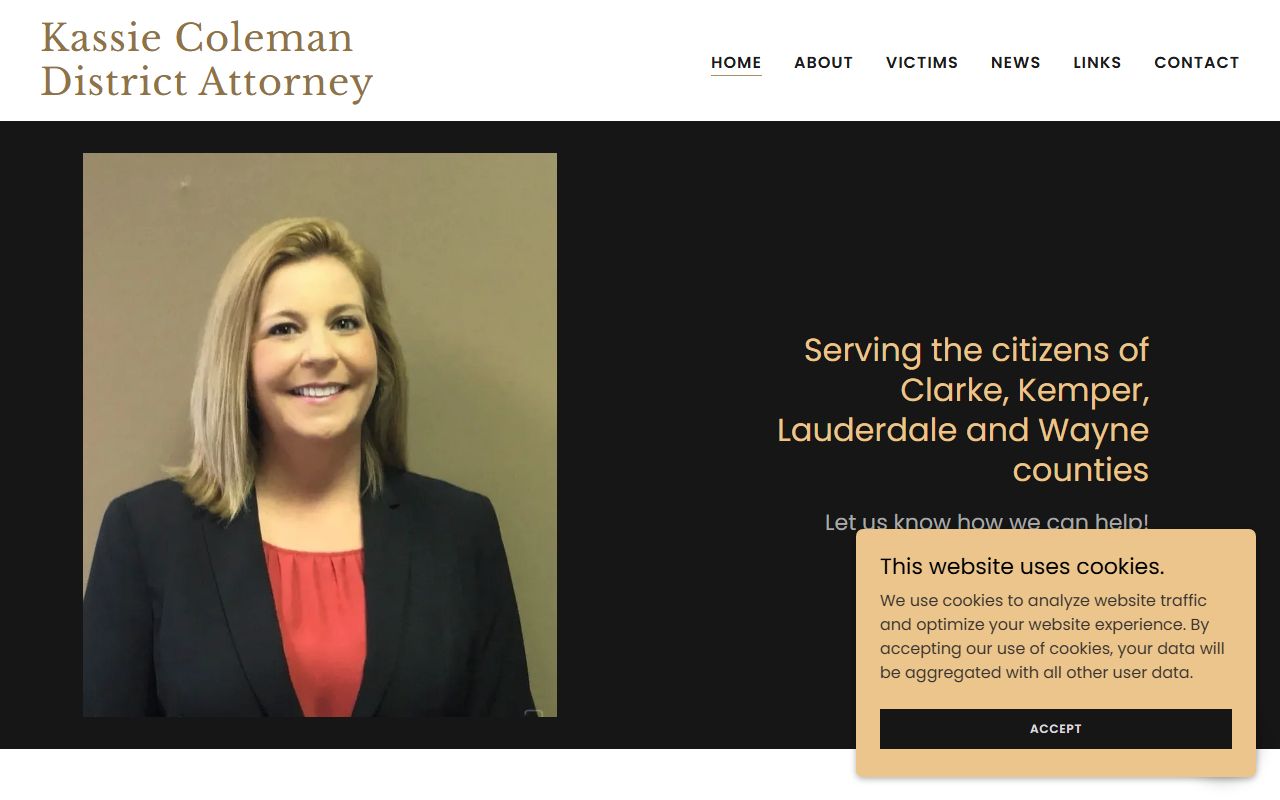
The site confirms the same multi-county district that prosecutes Clarke County felony charges. That caseload feeds most of the felony files held in Circuit Court.
The DA's about page notes that Coleman was sworn in for the 10th Circuit Court District in 2018.
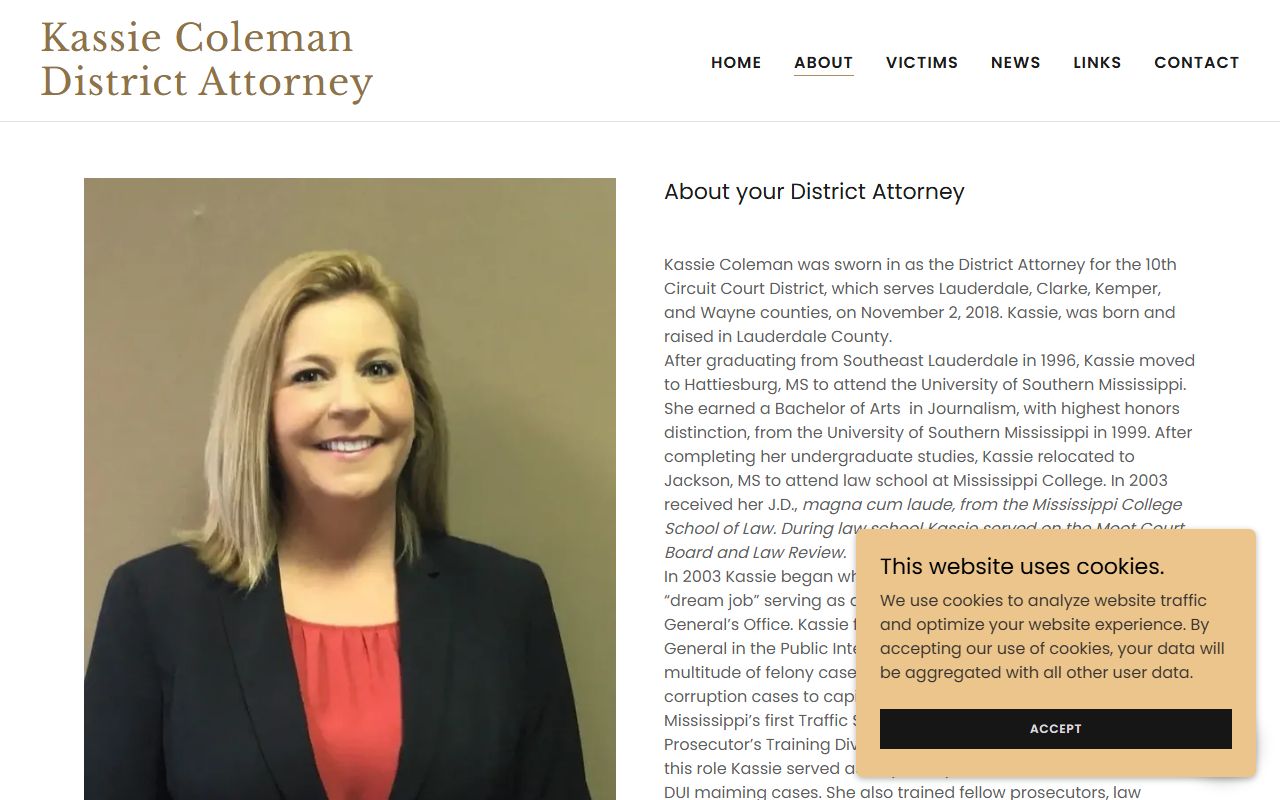
That office carries the felony work that produces most Clarke County criminal court records. A separate county office handles the lower-court side.
The County Prosecuting Attorney handles a different set of cases. Edward N. Kramer III represents the state in felony matters before the justice or county court, and in criminal appeals from those courts to Circuit Court. The county prosecutor can also present matters to the grand jury and handles misdemeanor youth court proceedings.
The district office also runs a victim assistance program. A county page for the 10th Circuit District describes how that program updates felony victims on case status.
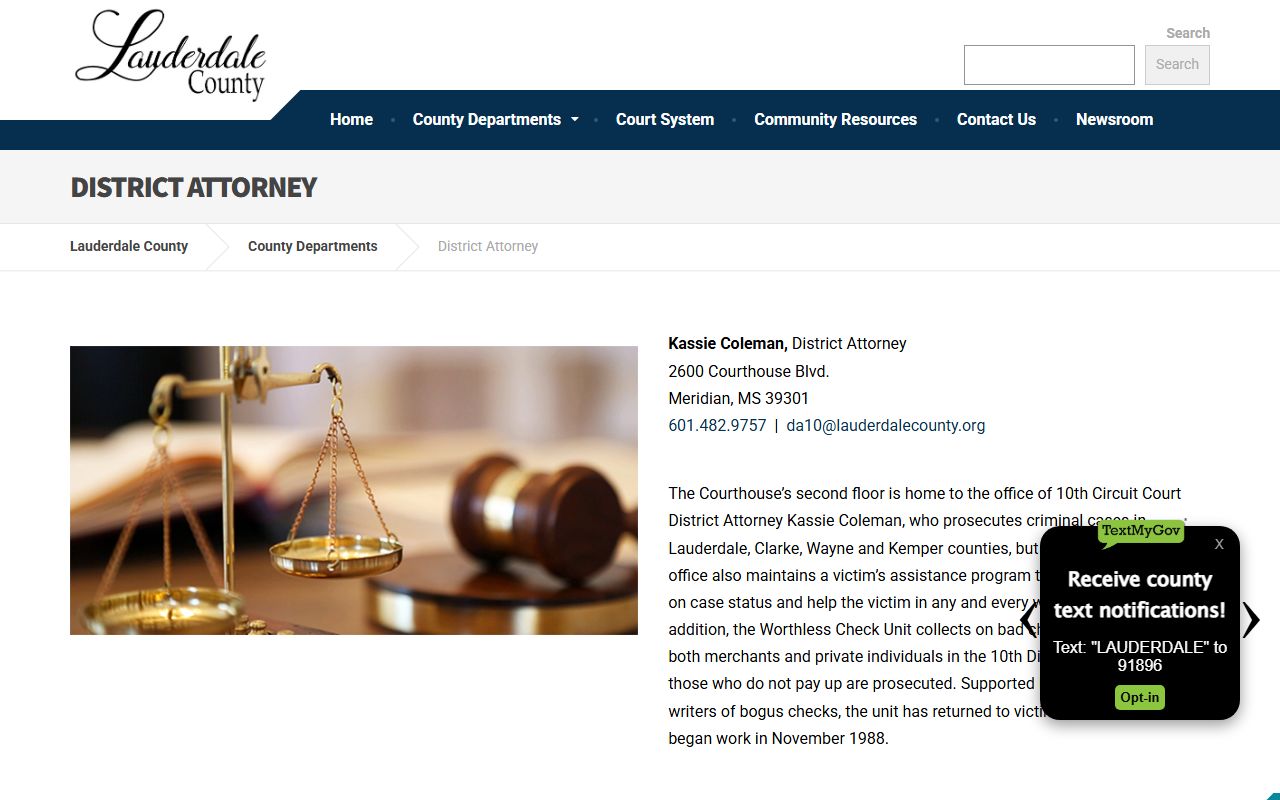
Victims of Clarke County felony crimes can use that program to follow a case as it moves through the court.
Charges vs. Convictions
Being charged is not the same as being convicted. A Clarke County criminal court record can show charges that were later dropped, dismissed, or that ended in acquittal. A charge is an accusation. A conviction is a finding of guilt by plea or verdict. Reading the disposition for each count tells the real result.
| Charge | Conviction | |
|---|---|---|
| Stage | Accusation | Verdict or plea |
| Burden of Proof | Probable cause | Beyond reasonable doubt |
| Public Record | Yes | Yes |
Reading Dispositions and Sentences
The disposition is the heart of a criminal court record. Common results include guilty, not guilty, dismissed, and nolle prosequi, which means the prosecutor chose not to proceed. A plea of no contest resolves a charge without an admission. The sentence follows a conviction and may list jail or prison time, probation, fines, restitution, or post-release supervision.
Some cases close through a diversion or intervention path instead of a standard conviction. The docket may show Pretrial Intervention Pending when a defendant enters such a program. The 10th Judicial District has run a drug court for the Meridian area that serves the same district as Clarke County.
A Mississippi Judiciary news release announced the 10th Judicial District Drug Court program.
A Clarke County case routed to that kind of program may close with a different disposition than a trial. The state tracks these programs through a central office.
The intervention court page from the Administrative Office of Courts is the state contact for program details.
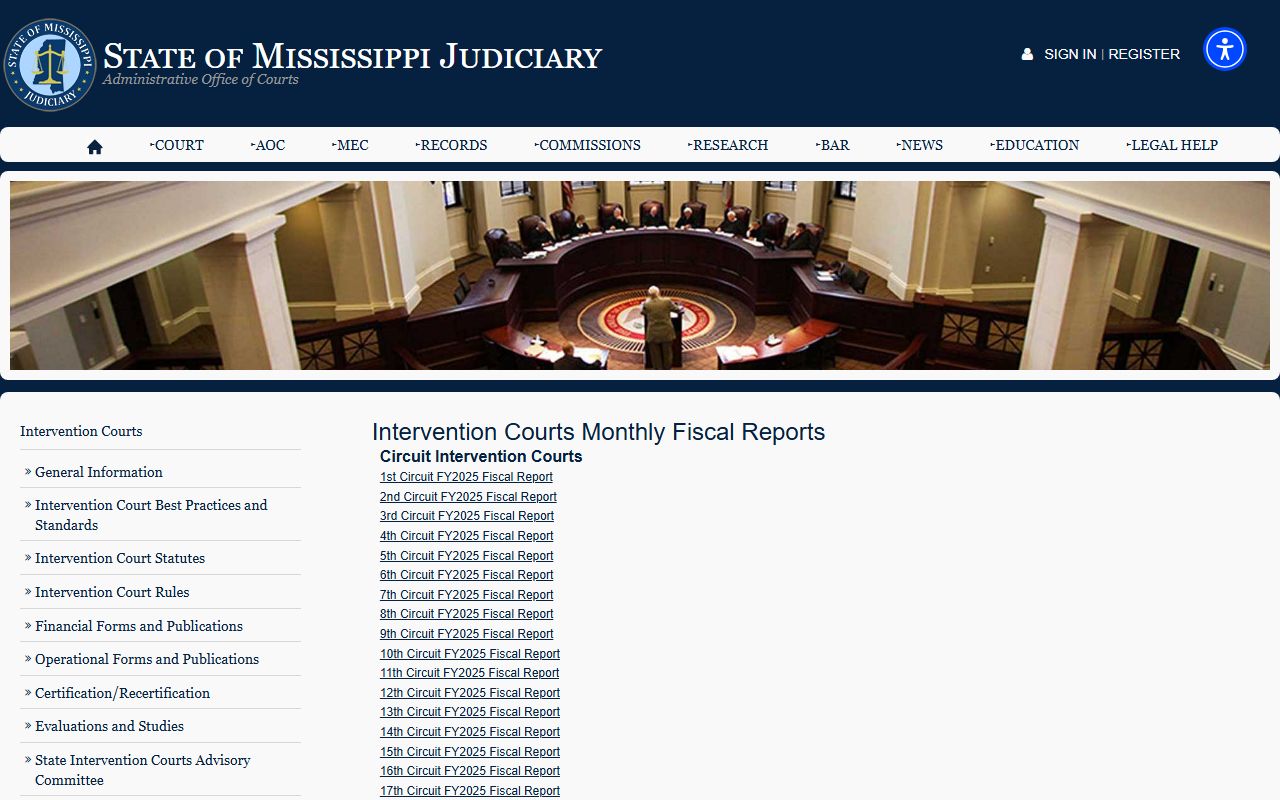
Ask the Circuit Court or District Attorney whether a Clarke County case qualifies for an intervention track.
Note: A diversion or intervention outcome can still appear in the case file, so confirm the final disposition with the clerk before relying on it.
Sealed vs. Expunged Records
Two terms control whether the public can see a closed case. A sealed case is hidden from ordinary public view but still exists. An expunged case is treated as though it never happened, and the record is removed from public access. The MEC system uses both a Sealed Case flag and an Expunged flag. Eligibility in Mississippi depends on the charge, the outcome, and the person's prior record.
| Sealed | Expunged | |
|---|---|---|
| Visibility | Hidden from public | Removed from public access |
| Law Enforcement | Limited access | Very limited access |
| Eligibility | Set by court order or law | By petition under Miss. Code § 99-19-71 |
Public Access to Clarke County Criminal Records
Criminal court records in Mississippi are public unless a statute or court order restricts them. The Mississippi Public Records Act treats records held by government bodies as open. Court case files are still subject to sealing, expunction, juvenile confidentiality, and the redaction of personal identifiers. When a record is not online, a written request to the Circuit Clerk is the next step.
Key Statutes:
Mississippi Code Title 25, Chapter 61 - the Public Records Act keeps government records open to the public unless an exemption applies.
Mississippi Code § 99-19-71 - sets the conditions for expunging eligible arrests, dismissed charges, and certain convictions.
Restricted Clarke County Criminal Records
Some criminal court records are closed to the public. Youth Court files are confidential under Mississippi Code § 43-21-251, so juvenile delinquency cases do not appear in a public search. Access belongs to authorized parties, attorneys, and people who hold a youth-court order.
Sealed and expunged cases also fall outside ordinary public access. A sealed file may show only a limited docket shell, and an expunged case should not be treated as a public record at all. Clerk staff cannot release sealed contents without authority. Personal identifiers like Social Security numbers and dates of birth are redacted from public filings.
Note: A person seeking to clear a Clarke County record should confirm eligibility with the clerk or an attorney, since exclusions can change the analysis.
Background Check Considerations
A casual record search is not the same as a formal background check. Employers, landlords, and licensing bodies must follow federal rules under the Fair Credit Reporting Act when they pull a report for those purposes. A name search on a court system can miss sealed or expunged matters and may not confirm identity. For a decision that affects someone's job or housing, use a compliant screening service and verify any hit with the clerk.
Important: This site is a privately operated resource, not a consumer reporting agency under the FCRA, and its information cannot be used for credit, employment, tenant, or insurance decisions.